
 011 568 3336 / 011 568 3423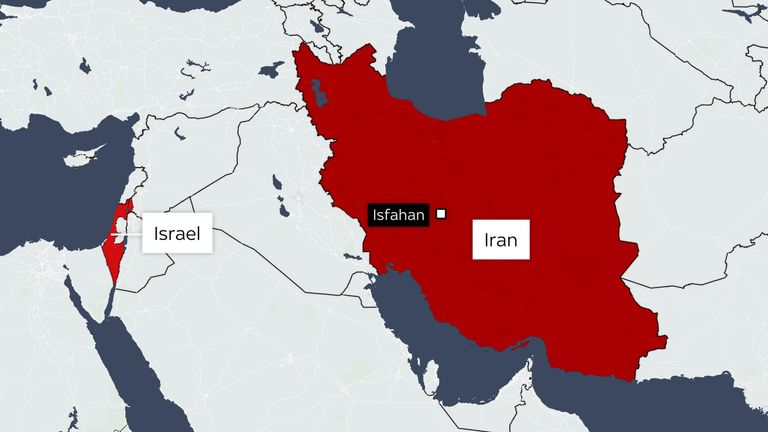
Implications of the U.S.-Israel strikes on Iran: Markets, macro, and scenario outlook
By Francois Botha, Chief Investment Officer, OIG
March 2026
The coordinated USA and Israeli strikes on Iran at the end of February have triggered one of the most significant geopolitical shocks to global markets in years. The death of Iran’s Supreme Leader, Ali Khamenei, and the extensive damage to military and energy infrastructure have altered the regional balance of power and created immediate disruptions in the Strait of Hormuz. This is arguably the most important chokepoint in the global energy system. Maritime traffic through the strait has slowed to a near standstill as Iran has warned commercial vessels that they “could be at risk from missiles or rogue drones,” a threat that has led tanker owners and major container shipping lines to suspend operations entirely. With roughly a fifth of the world’s crude and Liquified Natural Gas (LNG) moving through this narrow passage, the economic implications were felt almost instantly.
Oil prices instantly escalate
Oil prices surged above $100 per barrel as the market absorbed the effective paralysis of the strait, with Brent climbing as high as $108-120 during intraday trading after Gulf producers were forced to reduce output due to export bottlenecks. Analysts have warned for several years that the risk premium embedded in Middle Eastern supply chains could become nonlinear if shipping becomes commercially uninsurable. That dynamic has now materialised. In parallel, the region has experienced escalating drone and missile attacks, including strikes on the United Arab Emirates (UAE) Fujairah oil zone and disruptions at Dubai International Airport, highlighting the breadth of the conflict’s spillover effects on logistics and aviation networks.
Global financial markets reacted with the classic signature of an energy shock.
Bond yields rose, and yield curves flattened as inflation expectations moved higher, reflecting the direct transmission of elevated energy prices into headline inflation. These patterns mirror historical episodes of stagflation concerns. The equity market response has been broadly risk-off: U.S. stocks weakened, with the Dow Jones Industrial Average dropping more than 600 points on 9 March following Iran’s appointment of a new hard-line supreme leader who signalled no intention to de-escalate the conflict. Selling pressure intensified in markets that had outperformed earlier in the year, while energy producers and defensive sectors outperformed.
Against this backdrop, the inflation outlook has shifted meaningfully.
Europe is the most vulnerable: its higher reliance on imported energy and LNG exposure makes it particularly sensitive to disruptions in Hormuz, and price pressures there are expected to be both stronger and longer-lasting. Rising producer prices in China also add to global inflation pressures, given China’s position in global supply chains. By contrast, the United States faces a more moderate inflation impulse thanks to its flexible energy sector and domestic supply buffers, though low-income households will feel a disproportionate impact from higher fuel and utility prices.
Central banks now face a familiar but intensified policy dilemma…
Weakening growth momentum on one side and higher inflation on the other. The Federal Reserve retains an easing bias but is expected to delay rate cuts until September and into early 2027, consistent with the view that the inflation spike is supply-driven but cannot be ignored in the near term. The European Central Bank is expected to stay on hold through 2026, caught between softening real activity and persistent energy-related inflation pressures. In the United Kingdom, the Bank of England is also postponing cuts until mid-year. Japan remains an outlier, with the Bank of Japan still expected to hike once this summer, although yen volatility could trigger a larger move. In emerging markets, the divergence continues: China’s central bank is still likely to deliver two cuts beginning in May, while India is expected to remain on hold. Overall, monetary policy is entering a “wait-and-see” period characterised by delayed easing cycles and increased sensitivity to headline inflation.
Growth prospects reflect a widening divergence across regions
The U.S. economy, despite the inflation impulse, remains comparatively resilient due to domestic energy production and a robust services sector. Europe, however, faces a combination of higher energy costs and softer real incomes, with Germany and several Eastern European economies expected to bear the brunt of the shock.
Four broad scenarios define the forward path for markets and the macroeconomy.
The first is rapid de-escalation, in which U.S. and Israeli objectives are declared largely achieved, and Iran refrains from further escalation. In this case, maritime traffic would normalise quickly, oil prices would retrace toward the $80–90 range and ultimately settle near $70, and central banks could return to their previously anticipated easing paths.
The second scenario, a prolonged but contained standoff lasting several weeks, is currently the market’s base case. Here, the strait remains partially impaired, but not closed, oil trades in a volatile $90-110 range, and inflation remains elevated across Europe and parts of Asia. Markets in this scenario would likely continue to display two-way volatility, with sudden swings driven by headlines on naval escorts, diplomatic channels, and proxy escalation.
The third scenario, which deserves more attention, involves internal fragmentation in Iran following the death of Khamenei. Should competing factions – including the Islamic Revolutionary Guard Corps (IRGC) opposition groups, and regional militias – contest control of the state, Iran’s oil production could suffer persistent multi-year losses. This scenario mirrors historical precedents in Libya, Syria, and Iraq, where production took years to recover or never fully returned. Even with the Strait reopened, the global market could face a structural deficit of one to two million barrels per day, keeping the futures curve in backwardation and embedding a long-term inflation premium into the global economy.
The fourth and most severe scenario is an extended regional war. In this tail-risk outcome, Iran targets Saudi or Emirati infrastructure, or shipping insurers deem Hormuz effectively uninsurable. Oil could exceed $150-200 per barrel, LNG markets could relive or surpass the 2022 European energy crisis, and global inflation would rise sharply. Under such conditions, central banks would likely prioritise financial-stability tools over traditional inflation-targeting frameworks, and recession risks would rise materially across advanced economies.
The market reaction to the conflict so far has been logical and consistent with the magnitude of the shock. What happens next depends primarily on the duration and breadth of disruption in the Strait of Hormuz. For now, investors face a world in which inflation is moving higher, rate cuts are delayed, and growth divergences are widening.
Commodities, particularly oil and gold, are performing exactly as expected in a geopolitical stress environment, providing diversification when traditional financial assets struggle to price discontinuous risk. Whether this remains a temporary spike or evolves into a structural shift will be determined not only by military decisions in Washington, Jerusalem, and Tehran, but also by the capacity of the global system to reroute, insure, and secure the flow of energy through the world’s most strategically sensitive waterway.
Disclaimer
Although reasonable steps have been taken to ensure the validity and accuracy of the information in this document, Optimum Investment Group (OIG) does not accept any responsibility for any claim, damages, loss or expense, however, it arises, out of or in connection with the information in this document, whether by a client, investor or intermediary.
Optimum Investment Group (Pty) Ltd. Is an Authorised Financial Services Provider (43488).
All investments involve risk, including the potential loss of principal. There is no assurance that any financial strategy will be successful. OIG does not guarantee that the results of any advice, recommendations, or strategies will be achieved. Before making any investment decisions, customers should thoroughly review all relevant investment product documents and information. It is essential to assess whether an investment aligns with your financial situation, objectives, and risk profile.
This document may contain forward-looking statements identified by terms such as “expects,” “anticipates,” “believes,” “estimates,” “forecasts,” and similar expressions. These statements involve risks, uncertainties, and other factors that could cause actual results to differ materially from those projected. OIG is not responsible for any trading decisions, damages, or other losses resulting from the use of the information, data, analyses, or opinions provided.
Past performance does not guarantee future results. Neither diversification nor asset allocation ensures a profit or protects against a loss.
The information, data, analyses, and opinions presented herein are for informational purposes only and do not constitute investment advice or an offer to buy or sell any security. References to specific securities or investment options should not be considered an offer to purchase or sell those investments. The performance data shown reflects past performance and is not indicative of future results.
The opinions expressed are those of OIG as of the date written, are subject to change without notice, and do not constitute investment advice.